
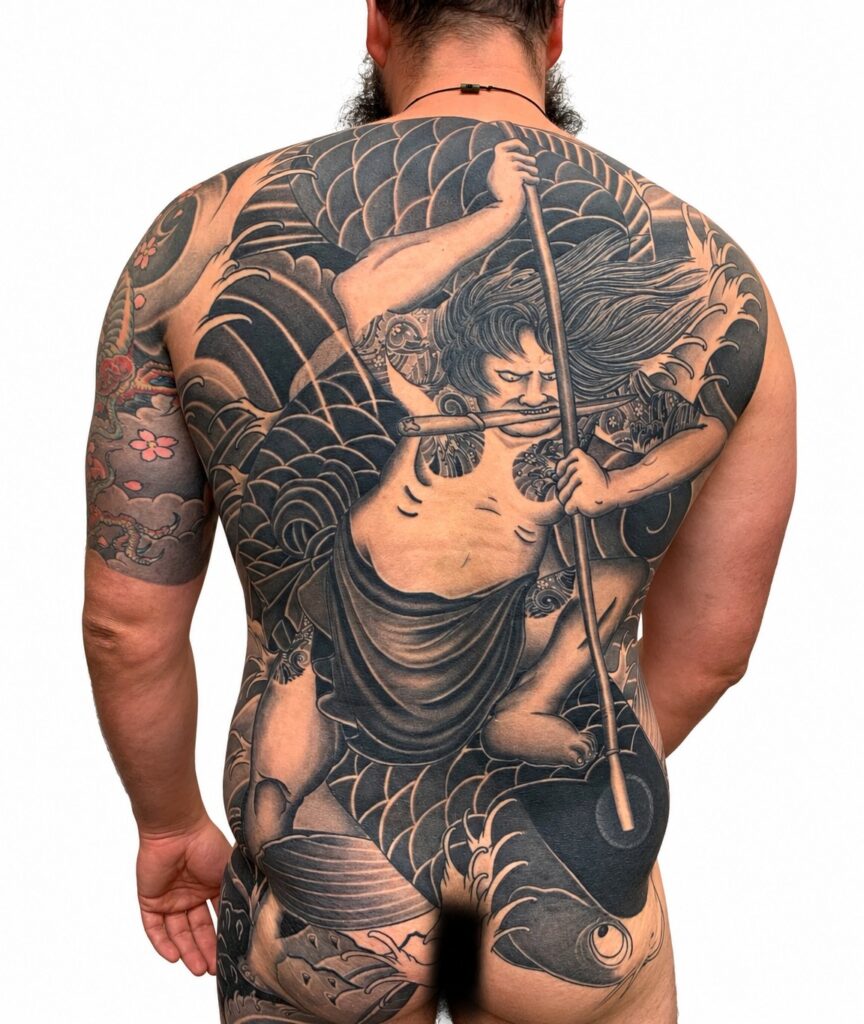
A back piece is the biggest single canvas most people will ever give a tattooist. It is also the one you see least, so it pays to plan it properly before the first line goes in. Whether you live in Perth, drive in from regional WA or fly over from Sydney or Melbourne, this guide walks through how we plan a back piece at our Barrack Street studio, from the first idea to the last healed session.
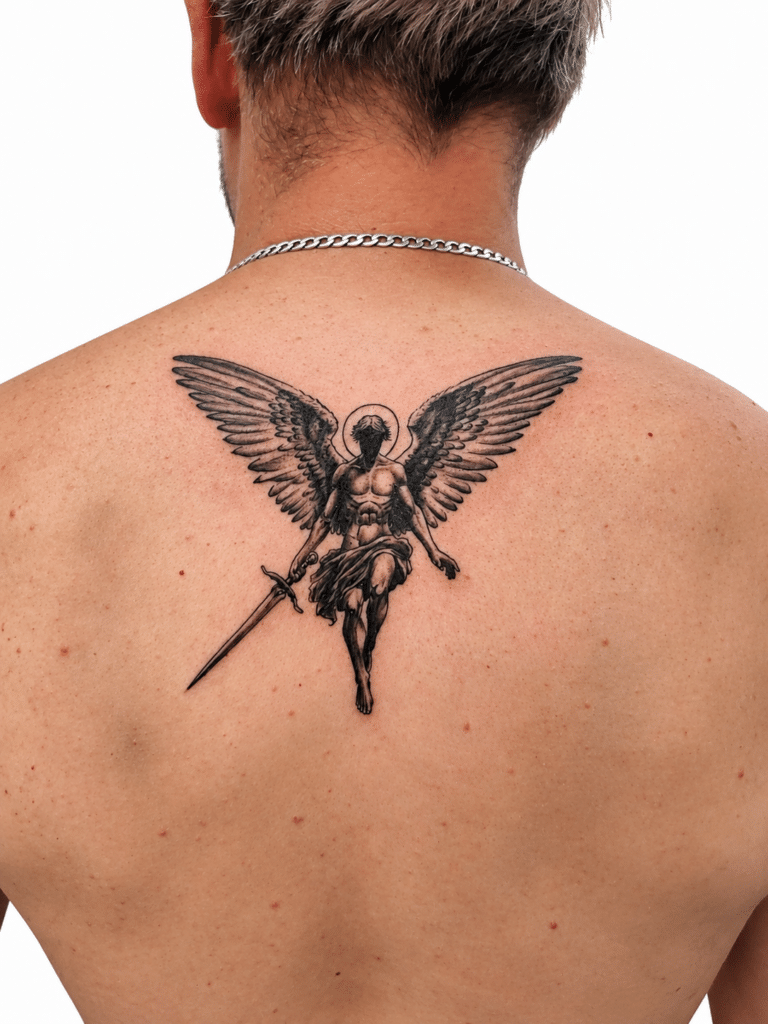
A centred upper-back piece can stand alone or become the top of a larger back design later.
1. Decide how much of your back you want covered
“Back piece” can mean very different sizes, and the size decides almost everything else. The common options are:
- Upper back: across the shoulder blades and up towards the neck. A good start if you want to test how you sit for long sessions.
- Centre panel: a vertical design that follows the spine, which suits mandalas, florals, figures and script.
- Full back: neck to waist and shoulder to shoulder, the classic large-scale piece.
- Back to buttocks or thighs: the traditional Japanese approach, where the design flows down over the hips so it looks finished from every angle.
If you think you may want more later, tell us now. A small upper-back tattoo placed with a future full back in mind is easy to extend. One placed off-centre with no plan can box you in.
2. Choose a subject that suits a big, flat canvas
The back reads from a distance, so bold subjects with a clear shape work best: a dragon, tiger, phoenix or warrior in Japanese style, a large mandala or ornamental design, a black and grey realism scene, or a religious or mythological figure. Think about what you will still want to carry in twenty years. Bring reference images, but expect us to redraw them so the design fits your body rather than copying a picture.
Browse our Japanese tattoo, dragon tattoo, mandala tattoo and black and grey tattoo pages to see which direction feels right.
3. Design for the body, not the page
A drawing that looks great flat on paper can look distorted on a back that bends, twists and has a spine running down the middle. When we design a back piece we look at:
- The spine as a centre line, so faces and key details are not split or skewed.
- Shoulder blades and lats, which move with the arms and can stretch parts of the image.
- Flow into the arms, sides and hips, if you plan sleeves or a body suit later.
- Existing tattoos, which may need to be worked in or covered.
We draw the main shapes directly onto the skin or use a stencil so you can see the size and position in the mirror before we start. Healthy WA also suggests a stencil if you are unsure about placement, so you can try the design on before you commit.

Centring a design on the spine keeps it balanced as the back moves.
4. Black and grey or colour?
Both work on the back. Black and grey gives strong contrast and a classic look, while colour can make a Japanese or neo-traditional design stand out from across a room. Colour usually needs more passes and more time. We will talk through how each option tends to age on your skin tone and how much sun your back is likely to get, especially if you spend weekends at Perth’s beaches.
5. Plan the sessions and the healing
A full back is built over many sessions spread across months, not done in one sitting. We normally outline first, then add shading and colour section by section, leaving time for each area to heal. A plan we agree on together might look like this:
- Consultation and drawing: photos, measurements, ideas and a first sketch.
- Outline sessions: the main lines and shapes, which lock in the composition.
- Shading and colour: worked in sections so you are not healing your whole back at once.
- Finishing and touch-ups once everything has healed.
A back you cannot see or reach is harder to look after, so think about who can help with washing and moisturising. Healthy WA advises not to pick or scratch a new tattoo, not to soak it or swim until it has healed, to wear loose clothing over it and to keep sunscreen off it until it has healed (then use SPF 15 to 50+ to stop fading). It gives two to three weeks as a typical healing time for tattoos. For a big area, plan to sleep on your front for a few nights, and avoid booking a session right before a beach holiday or a long-haul flight. Our tattoo aftercare guide for Perth has more detail.
If you are coming in from regional Western Australia or interstate, tell us how often you can travel. We can group sessions around your trips so each visit makes real progress.
6. Already have a Bali tattoo on your back?
Plenty of Australians come home from Bali with a small tattoo on the upper or lower back. It does not have to rule out a back piece. Depending on how dark and faded it is, how well it healed and where it sits, it can often be absorbed into a larger design or covered by a darker section. Send us clear photos and we will tell you honestly what is possible. It is worth knowing that Healthy WA does not recommend getting tattooed overseas, especially in developing countries, because the infection risk may be higher and aftercare support is limited. It also advises choosing an established studio that follows good hygiene practices.
Your back piece checklist
- Pick the size: upper back, centre panel, full back or down to the thighs.
- Choose a subject you will still love in twenty years.
- Collect reference images, then let us redesign them for your body.
- Decide on black and grey or colour.
- Plan your sessions around work, travel and healing.
- Line up someone to help with aftercare.
For a printable version, grab our free sleeve and back piece planning guide. When you are ready, book a back piece consultation in Perth and bring your ideas, or look through our tattoo gallery for inspiration first. If you have a skin condition, allergies, take blood thinners or have any health concerns before a long session, speak to your doctor.
Sources
- Healthy WA (Government of Western Australia, Department of Health), “Taking care of body art” (aftercare do’s and don’ts, sunscreen once healed, tattoo healing time of 2 to 3 weeks)
- Healthy WA, “Preparing yourself for body art” (trying a stencil first, choosing an established studio, advice against getting tattooed overseas)

